Back to the 17th Century: Historic Gems Along the Amsterdam Canals
Amsterdam is an open-air museum. Anyone walking along the canals can feel the city’s history in the leaning facades and centuries-old bridges. But as impressive as the city is today, the story of the 17th century (the Dutch Golden Age) is often difficult to truly imagine. Where canal boats sail today, enormous trading ships once filled the waterways. Where cars now drive, world-famous painters and admirals once walked.
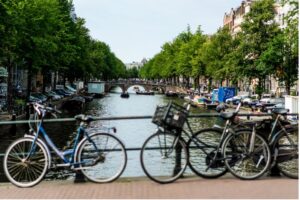
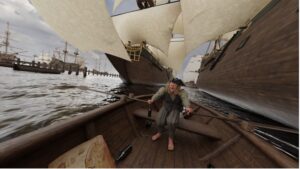
Imagine this: you’re calmly sailing through Amsterdam’s canals, the sun sparkling on the water… and suddenly you come face to face with the past. That’s exactly what you experience with VR Voyage. During our tour, you don’t just admire the monuments of today—you step straight into the 17th century with a VR headset. Buildings regain their former glory, historical figures come to life, and events unfold exactly where you are—right in the middle of the water. What exactly will you encounter? We’ll keep that a surprise for now. But expect a mix of iconic locations, remarkable stories, and moments from Amsterdam’s history that you won’t soon forget.
Since our launch in June ’25, nearly 6,000 visitors have experienced the tour — and their reactions have been overwhelming. With an average rating of 4.9 on Tripadvisor (300 reviews) and a perfect 5.0 average on Google (210 reviews), VR Voyage has sailed its way to the top of Amsterdam’s canal tour scene within just six months. But even more meaningful than those numbers are the words and stories shared by our guests. In this blog, we’ll share a small glimpse of what you can experience during the tour, along with some of the many enthusiastic reactions we’ve received.
Wealth Along the Canal: The Golden Bend
No place in Amsterdam shows the wealth of the 17th century better than the Golden Bend on the Herengracht. This is where the richest merchants, bankers, regents, and mayors lived. The canal houses here are wider and deeper than anywhere else in the city. During the cruise, you’ll discover how this elite lived and how the city’s expansions between 1613 and 1663 shaped the Amsterdam we know today.
[The 17th-century canal ring area of Amsterdam within the Singelgracht.]

The Gateway to the World: The Old Harbor
Our route takes you past places that formed the beating heart of global trade in the 17th century. One example is the Schreierstoren, an iconic defensive tower where countless sailors said goodbye to their wives before setting off on dangerous voyages (discover the Schreierstoren). Even daarvoor kom je langs de Montelbaanstoren. Deze toren werd oorspronkelijk gebouwd als verdedigingsbouwwerk, maar groeide in de 17e eeuw uit tot een baken van de maritieme macht van de stad. Ook het Scheepvaartmuseum (‘s Lands Zeemagazijn) mag niet ontbreken. Dit gebouw uit 1656 diende als pakhuis voor de marine; hier lagen de kanonnen, zeilen en uitrusting voor de oorlogsvloot opgeslagen. In onze VR scenes zie je deze plekken niet als stille monumenten maar als drukke locaties waar schepen zich klaarmaakten voor vertrek óf net aankwamen onder luid gejuich van de haven.


Icons of the 17th Century
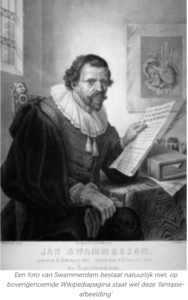
The bricks tell only half the story; it were the people who gave the city its character. During the tour and through the stories in the audio guide, you’ll encounter famous historical figures who once walked these very streets. Some of their houses can be seen virtually and/or in real life. We’ll mention just one here. A relatively unknown person, although many cities have a street named after his surname. Jan Swammerdam (1637–1680) was one of the quiet geniuses of the Dutch 17th century. While painters and merchants were conquering the world, Swammerdam was diving deep into nature. Using self-made microscopes, he studied insects and demonstrated that even the smallest creatures have astonishingly complex structures. Swammerdam combined sharp observation with endless patience, laying the foundations for the modern entomology. He also proved that the male sperm cell fertilizes the female egg cell and discovered the existence of red blood cells. His work shows that the 17th century was not only about wealth and art but also about curiosity and science.



Experience It Yourself
It’s one thing to read about the founding of the Exchange Bank or the return of the Second Fleet, but it’s something entirely different to stand in the middle of these historic developments. With VR Voyage, we combine the comfort of a modern boat with the magic of time travel.
Do you want to not only hear about the 17th century, but truly see it? Book your tickets for VR Voyage here and experience 17th-century Amsterdam.